 Organic and Natural Cotton Color

Supply chain: colored organic cotton at Première Vision Paris 2026

From September 1 to 3, 2026, Première Vision Paris was dedicated to innovation and technology. Artificial intelligence, 3D design, bio-based materials and circularity were at the center of the program, with a focus on solutions that brands can apply in production. In this context, Natural Cotton Color, a Brazilian sustainable fashion brand, took part on two fronts: at a stand in the Smart Creation area, where it presented naturally colored organic cotton fabrics, and at the Innovation, Technology and Sustainability Forum, where it showcased its supply chain. Its sustainable fashion proposal fits a term the market already uses: dye-free cotton, that is, cotton without dyeing, because the fiber is born colored.
At the Smart Creation stand: sustainable fabrics and organic cotton knits
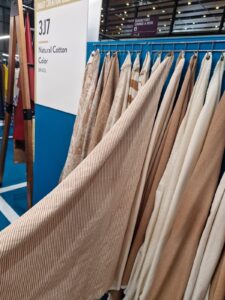 Smart Creation is the area of the show dedicated to sustainable and technological innovations that are already industrialized, and it is a business space for brands and manufacturers looking for raw materials. It was there that Natural Cotton Color presented its inputs for sustainable fashion: knits, fabrics and handcrafted textile work, all made with naturally colored cotton in shades of beige, brown and green.
The dye-free concept is central to this offer. Because the fiber is naturally pigmented, there is no chemical dyeing, and the project’s data indicate water savings of up to 87.5% and lower energy use. Première Vision itself has used the term to classify this kind of proposal: in September 2025, the innovation preview published in PV’s magazine grouped samples in natural colors under a “Dye-Free Patterns” section, and the image caption names Natural Cotton Color alongside two Portuguese exhibitors.
The foundation is certified organic cotton. The cotton used by Natural Cotton Color and Texpar is organic and carries the GOTS (Global Organic Textile Standard) label, recognized in 73 countries. The offer is built on partnerships: the fabrics are developed with companies such as Cataguases, Dalila Têxtil and EcoSimple, and the knits with Texpar.
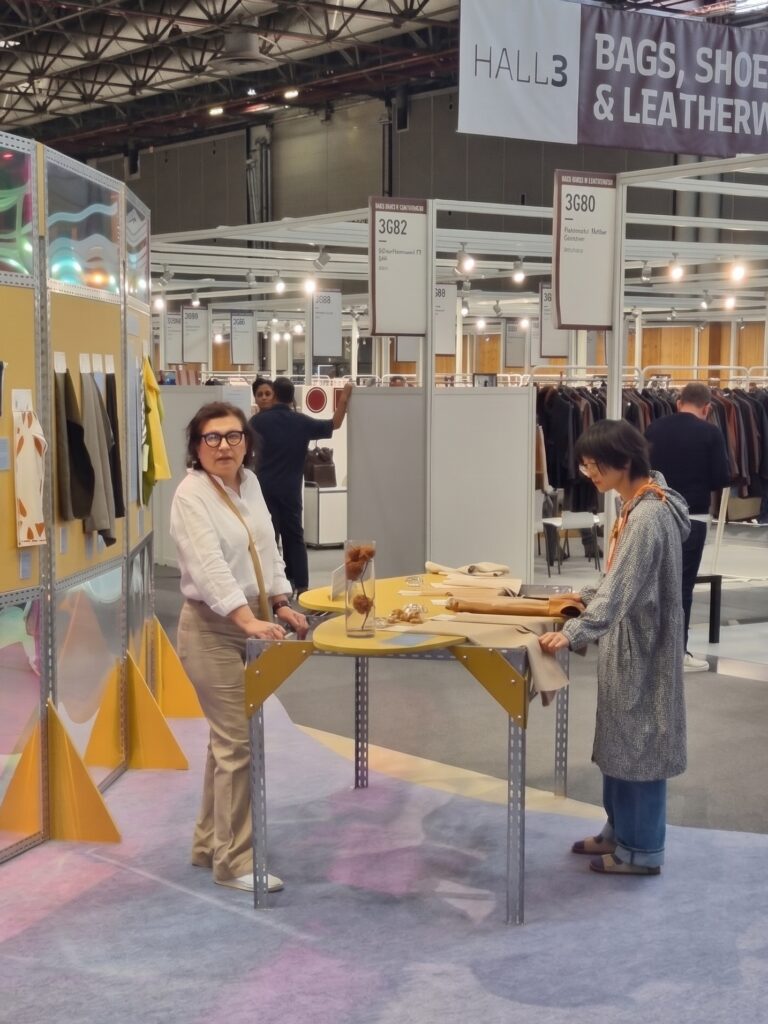
Francisca Vieira, CEO Natural Cotton Color
The 2026 launch consisted of two organic cotton knits developed with Texpar and The LYCRA Company: Cotton with LYCRA® and Piqué LYCRA®. They combine colored cotton with Renewable LYCRA® fiber, at 4% and 2% respectively. The fiber contains 70% bio-derived content from corn and reduces CO₂ emissions by up to 44% compared with conventional elastane, according to the press release. Texpar invested about R$10 million in an industrial stenter, which helps limit twisting and excessive shrinkage, and the looks were also presented at Milan Fashion Week, in the swimwear collection of the brand Celeste.
“Being present in both spaces reflects what the edition set out to do: take innovation from concept to application. For Natural Cotton Color, this meant presenting in Paris a ready-to-buy dye-free organic cotton product, a new launch, and the supply chain that makes it all possible”, says Francisca Vieira, CEO Natural Cotton Color.
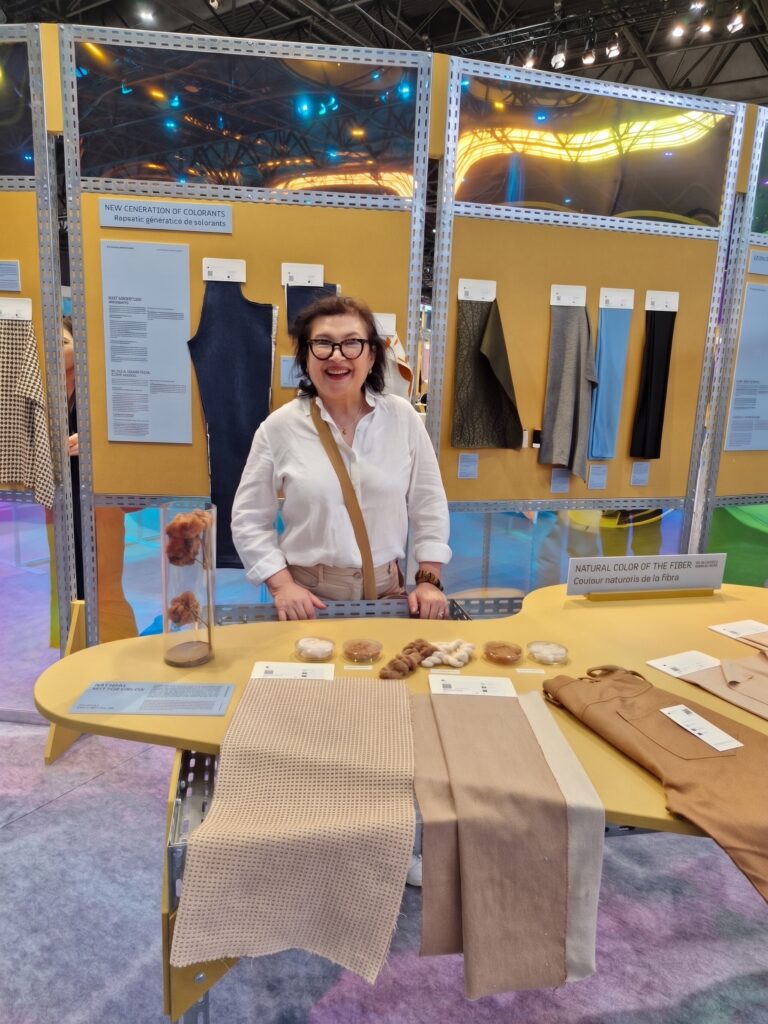
Natural Cotton Color presented its naturally colored organic cotton fabrics at Smart Creation and showcased its supply chain at the Innovation, Technology and Sustainability Forum.
At the innovation forum: the organic cotton supply chain, from seed cotton to finished garment
The second space played a different role. According to the press release from Natural Cotton Color, Texpar and The LYCRA Company, the samples were to be part of the Innovation, Technology and Sustainability Forum, where NCC was the first Brazilian company invited to present its textile chain in an educational way. The display follows the stages of organic colored cotton, from seed cotton and lint to carded fiber, fabric and finished garments.
If the stand is for selling, the forum is for explaining. Showing the whole chain answers the questions the market asks today about sustainable fashion and traceability: where the fiber comes from, who produces it, and how many steps lie between it and the garment. The cotton comes from Itacoop, a cooperative of 90 family farmers in Ingá and 11 other municipalities in Paraíba, and Texpar transforms it. NCC, led by Francisca Vieira, handles the design of the knitwear and garments. Behind the fiber there is also research: Embrapa Algodão, in Campina Grande, crossed native colored species with hardier varieties, which increased fiber length and strength and made industrial use possible.